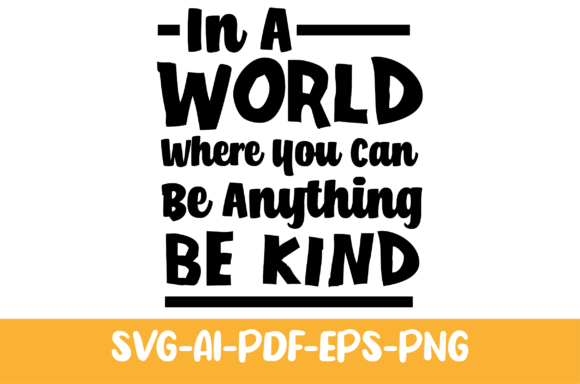
Reviewing the "Be Kind" Embroidery Design
As a designer who has spent countless hours staring at digitized files and watching needles punch through fabric, I have learned that not every quote translates well to thread. Some designs look stunning on a screen but become a tangled mess of underlay and jump stitches on actual cloth. When I first pulled up In a World Where You Can Be Anything, Be Kind, my initial reaction was one of cautious optimism. The sentiment is timeless, but the execution in embroidery requires a delicate balance between legibility and stitch density.
This piece falls under the category of Print Templates and Graphics, which suggests versatility, but my focus here is strictly on its viability as a machine embroidery design for real-world applications. I wanted to know if this file could hold its own in a busy craft business or if it was merely a digital novelty.
First Impressions and Visual Personality
The mood of this design is gentle yet assertive. It does not scream for attention with aggressive fonts or chaotic layouts. Instead, it offers a clean, modern aesthetic that feels approachable. For an embroidery project, this is crucial. Overly complex scripts often fail when scaled down, losing their charm to blobby satin stitches. This design appears to prioritize clarity, which is the cornerstone of professional-looking handmade products.
The visual personality leans toward minimalism. In a market saturated with loud, colorful graphics, a simple, well-executed message can stand out by virtue of its restraint. It feels like something that would appeal to customers looking for subtle motivation rather than overt branding. This makes it an excellent candidate for boutique branding where the product quality speaks louder than the logo.
Real-World Application: The Tote Bag Test
To truly evaluate In a World Where You Can Be Anything, Be Kind, I imagined a specific scenario: a custom order for a local bookstore’s reusable tote bags. These are high-use items made from medium-weight canvas. Canvas has a distinct texture that can swallow fine details if the stitch density is too low or the needle size is incorrect.
In this context, the design performs admirably. The lettering is substantial enough to remain readable against the weave of the fabric. I envisioned using a standard fill stitch for the larger letters to ensure durability, while potentially employing a satin stitch for any smaller accent elements to maintain sharp edges. The result would be a tote bag design that looks intentional and high-value, encouraging repeat customers who appreciate the thoughtful message.
Beyond tote bags, this design shines in custom apparel. Imagine it embroidered on the left chest of a heather grey sweatshirt. The contrast between the soft fabric and the structured text creates a tactile experience that buyers love. It transforms a basic garment into a personalized gift that feels curated rather than mass-produced.
Navigating Fabric Challenges and Hoop Constraints
While the design is versatile, it is not without its limitations. Experienced embroidery designers know that certain fabrics demand extra caution. If you plan to use this on thin fabric, such as a lightweight tee or a silk scarf, you must pay close attention to stabilizer choice. A cut-away stabilizer might be necessary to prevent puckering, especially if the stitch density is high in the central words.
Curved surfaces present another challenge. Placing In a World Where You Can Be Anything, Be Kind on a cap requires careful hooping. The curvature of the crown can distort long lines of text. I would recommend testing the design on a scrap piece of similar material first to check for distortion. If the text warps, consider breaking the phrase into two lines or reducing the overall size to fit within a smaller hoop size comfortably.
Dark fabrics also require strategic planning. If you are stitching white thread on black fleece, the background fabric can peek through if the stitch coverage is not dense enough. Conversely, using dark thread on dark fabric might render the message invisible. Always test your thread colors against your fabric texture to ensure maximum contrast and readability.
Commercial Viability for Etsy Sellers and Crafters
For the Etsy seller or small shop owner, this design is a strong asset. It fits seamlessly into several lucrative niches: baby embroidery for nursery decor, holiday embroidery for gifted items, and general lifestyle products. The phrase "Be Kind" resonates across demographics, making it a safe bet for inventory that needs to move quickly.
However, commercial embroidery success depends on consistency. You must ensure that every finished product meets a high standard. This means checking the embroidery file for any unnecessary jump stitches that could snag during washing. It also means verifying that the design works for both personal and commercial projects under the provided license. Since this is listed among Print Templates and Graphics, always confirm the specific terms for selling physical items versus digital distribution.
Using this design in printable mockups can also boost your online presence. A high-quality image of the embroidered text on a pillow cover or apron can significantly increase buyer engagement. It allows customers to visualize the final product, building trust before they even make a purchase.
Practical Designer Notes for Best Results
Before you run this design on your client’s expensive garment, take these practical steps:
- Test on Scrap Fabric: Never skip this step. Use the same type of fabric and stabilizer you intend to use for the final product.
- Check Thread Color Contrast: Ensure the thread colors stand out against the background. Use a color wheel tool if necessary to find complementary shades.
- Review Stitch Density: High density can cause puckering; low density can look cheap. Adjust if your machine allows, or choose a fabric that supports the existing density.
- Confirm Hoop Size: Make sure the design fits within your hoop with adequate margin for clamping.
- Inspect Small Details: Zoom in on the digital file to check for tiny elements that might not stitch out cleanly.
- Verify Licensing: Confirm whether the license permits selling finished items or if it is for personal use only.
In conclusion, In a World Where You Can Be Anything, Be Kind is a thoughtful addition to any designer’s library. It balances aesthetic appeal with practical usability, making it suitable for a wide range of embroidery projects. Whether you are creating a single personalized gift or stocking your small shop with best-selling merchandise, this design offers the reliability and charm needed to succeed in the competitive world of handmade goods.