Reviewing the Christmas is a Dental Assistant Design
As a designer who has spent countless hours digitizing and stitching out files for clients, I have learned that not every graphic translates well to thread. When I first encountered Christmas is a Dental Assistant, my immediate reaction was one of cautious optimism. It is a niche design, certainly, but niche markets are often where small business owners find their most loyal customers. The concept blends professional pride with holiday cheer, a combination that usually performs well in the custom apparel space. However, seeing a graphic on a screen is vastly different from watching it come to life under the needle of an embroidery machine.
First Impressions and Visual Personality
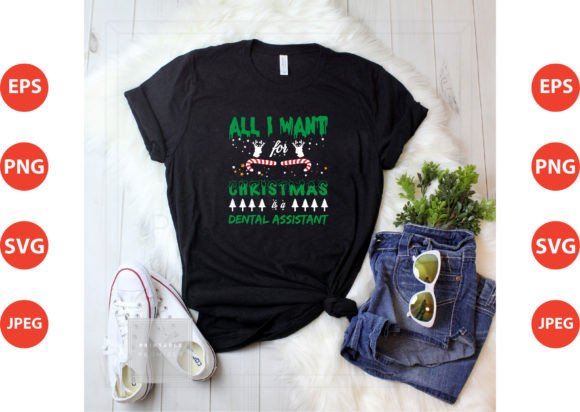
The mood of this design is playful yet professional. It captures the specific humor and dedication of dental assistants, a group that rarely gets the spotlight during the holiday season compared to nurses or teachers. Visually, the layout appears balanced, which is crucial for embroidery. If the elements are too scattered, you risk long jumps that can snag or look messy on the finished product. If they are too dense, you end up with a stiff, cardboard-like patch that ruins the drape of the fabric.
From a reviewer’s perspective, the charm lies in the thematic clarity. It does not try to be everything to everyone. It speaks directly to a specific audience. For an Etsy seller or a craft business owner, this specificity is gold. It allows for targeted marketing and higher conversion rates because the buyer feels seen. The design likely relies on clear shapes and readable text, which are essential for maintaining legibility after stitching. Complex gradients or tiny details often get lost in translation, so a design that prioritizes bold, clean lines is generally a safer bet for commercial success.
Real-World Application: The Holiday Gift Scenario
To truly evaluate Christmas is a Dental Assistant, I imagined a real-life scenario. A local dental office wants to create personalized gifts for their staff. They approach me with a request for something festive but appropriate for work. This design fits perfectly here. I would likely choose a high-quality fleece vest or a structured cap for this project. These items provide a stable surface for stitching and are practical for the winter season.
If I were stitching this onto a tote bag design prototype, I would pay close attention to the fabric texture. Canvas bags have a weave that can interfere with small details. In this case, using a cut-away stabilizer would be non-negotiable to prevent puckering. For a sweatshirt embroidery project, the loft of the fabric requires careful tension adjustments. The design needs to sit on top of the fibers, not sink into them. This is where understanding stitch density becomes critical. If the file is too dense, it will pull the fabric; if it is too light, the background fabric will show through, ruining the visual appeal.
Navigating Technical Challenges
While the concept is strong, there are areas where a designer must exercise caution. Small hoop sizes can be tricky if the design includes intricate lettering. Dental terminology can sometimes involve long words, and if the font size is reduced to fit a 4x4 hoop, readability suffers. I always recommend testing the design on scrap fabric first, especially if you are working with dark fabric. Thread color contrast is vital here. White or light-colored threads on navy or black garments need precise tension to avoid looping or breaking.
Another consideration is the type of stitch used. Without seeing the actual embroidery file data, I cannot confirm if it uses satin stitch for borders or fill stitch for larger areas. However, for a design intended for frequent washing, such as a work apron or uniform, durability is key. Satin stitches can catch on equipment if they are too wide, while fill stitches provide a smoother, more durable surface. If this design is being used for an embroidered patch, the edges must be cleanly finished to prevent fraying over time.
It is also important to note the file formats provided. The description mentions EPS, SVG, and PNG files. These are primarily vector and raster graphics formats, commonly used for sublimation or print-on-demand services like mugs and bags. For machine embroidery, you typically need DST, PES, or JEF files. If you are an embroidery designer planning to use this for stitching, you must verify if an embroidery-specific file is included or if you need to digitize the SVG yourself. Using a PNG for direct embroidery is not possible without conversion, which can lead to poor stitch quality if not done by a professional.
Enhancing Product Value and Brand Consistency
When used correctly, Christmas is a Dental Assistant adds significant value to a handmade product. It transforms a generic item into a personalized gift that carries emotional weight. For small shop products, this kind of targeted design helps build brand consistency. If your shop specializes in medical professional gifts, this design reinforces your niche authority. Customers trust sellers who understand their specific needs.
The visual appeal of the finished product depends heavily on execution. A well-stitched design looks premium and justifies a higher price point. Conversely, poor tension or misaligned hoops can make even the best design look amateurish. I advise creating printable mockups or digital previews to show customers how the design will look on different items. This manages expectations and reduces return rates. For commercial embroidery projects, consistency across multiple units is essential. Each item should look identical, which requires rigorous quality control.
Practical Notes for the Maker
- Test on Scrap Fabric: Always run a test stitch-out to check for registration issues and thread breaks.
- Check Thread Contrast: Ensure the thread colors stand out against the fabric, especially for holiday themes that might use reds and greens on dark backgrounds.
- Verify File Compatibility: Confirm that you have the correct embroidery file format for your machine. The listed EPS and SVG files are great for printing but not for direct stitching.
- Use Proper Stabilizer: Match the stabilizer to the fabric. Use tear-away for stable woven fabrics and cut-away for stretchy knits.
- Consider Licensing: Before selling finished items or digital products, review the license terms. Ensure you have commercial rights if you plan to sell the stitched goods.
In conclusion, Christmas is a Dental Assistant is a promising asset for designers who understand the nuances of embroidery. It offers a clear market fit and emotional resonance. However, its success depends entirely on the technical execution. By paying attention to stitch density, fabric choice, and file compatibility, you can turn this graphic into a standout finished product that delights customers and boosts your craft business reputation. Whether you are creating a baby embroidery item for a new parent in the field or a rugged cap for a seasoned professional, this design has the potential to shine if handled with care and expertise.