Dream Less Work More: A Designer’s Embroidery Review
As a designer who spends half my life digitizing and the other half staring at hoop marks on fabric, I have learned to look past the glossy mockups. When I first pulled up Dream Less Work More T Shirt Design, I wasn’t looking for flashiness. I was looking for utility. In the world of custom apparel, motivational quotes are a saturated market, but they remain a staple for a reason. People want reminders. They want attitude. The question is always whether the design holds up when translated from a digital screen to actual thread.
This specific piece falls under the category of Print Templates and Graphics, which immediately tells me it is a vector-based asset rather than a pre-digitized embroidery file. For an experienced embroiderer, this is both a blessing and a challenge. It means I have control, but it also means I have work to do before the needle hits the fabric. Let’s break down how this design performs in a real-world studio setting.
First Impressions and Visual Personality
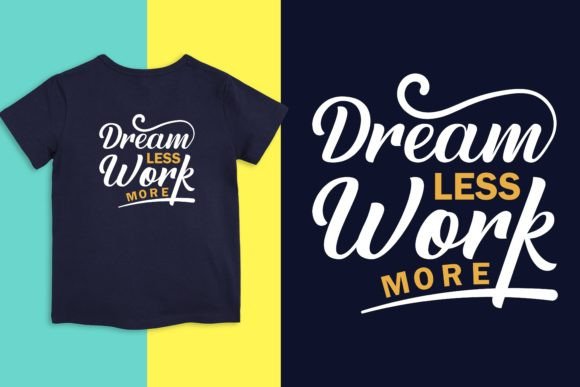
The phrase "Dream Less Work More" carries a blunt, industrial mood. It is not soft or whimsical; it is direct. Visually, the layout suggests a modern, sans-serif aesthetic that relies on bold spacing rather than intricate flourishes. This is crucial for embroidery. Intricate scripts often turn into tangled messes on textured fabrics, but blocky, clean typography tends to stitch out with high clarity.
The visual personality here is minimalist. It does not demand attention through complexity but through confidence. For a handmade product, this translates well. It feels contemporary and fits seamlessly into boutique branding where less is more. When I imagine this on a garment, I see it working best as a chest-left logo or a centered statement piece on a heavyweight hoodie. It lacks the decorative elements that would make it suitable for heirloom baby items, but it excels in contexts requiring strength and focus.
Real-World Application: The Sweatshirt Test
To evaluate its practicality, I mentally placed this design on a mid-weight cotton blend sweatshirt. This is a common request for Etsy sellers and small shop products. The design’s bold nature means it can handle the texture of fleece without getting lost. However, because this is provided as an EPS and SVG file, the transition to embroidery requires careful digitizing.
If you are creating a custom apparel line, you must consider stitch type. For the letters, a satin stitch might be too wide if the font is large, leading to snagging. A fill stitch with a slight angle could provide better coverage and durability. If the design includes any graphical elements alongside the text, those might benefit from a running stitch outline to keep edges crisp. The key is maintaining legibility. On a dark navy sweatshirt, using high-contrast thread colors like white or electric blue would make the message pop. On a heather grey garment, a tonal approach with dark charcoal thread could offer a subtle, sophisticated look.
Navigating Fabric and Hoop Constraints
Not every project is a sweatshirt. Let’s consider a tote bag design application. Canvas is dense and unforgiving. Here, the stitch density becomes critical. If you digitize this design too densely, the canvas will pucker, and the bag will look warped. You must balance the fill areas to ensure the fabric remains stable. Using a cut-away stabilizer is non-negotiable here to support the weight of the thread.
Conversely, if you attempt this on a curved surface like a cap, the layout needs adjustment. The phrase is horizontal, which works for the front panel of a dad hat, but you must ensure the height of the letters does not exceed the usable hoop area. Standard caps often have limited vertical space. You might need to scale the design down, which brings us to a warning: check the small details. If the design has tight kerning between letters, scaling it down for a embroidered patch or a small pocket logo could cause the threads to merge, ruining readability. Always test on scrap fabric first.
Commercial Viability and Customer Trust
For craft business owners, the perceived value of the finished product is tied to execution quality. A clean, well-stitched quote builds trust. It signals professionalism. When a customer buys a personalized gift or a piece of commercial embroidery, they are buying the sentiment and the craft. "Dream Less Work More" appeals to entrepreneurs, students, and hustlers. It is a niche-specific message that can drive engagement on social media.
However, because this is a digital asset, you must verify licensing. The description notes it includes EPS and SVG files at 300 dpi resolution. This is excellent for printing, but for embroidery, you are responsible for the digitization. Ensure you have the rights to use the font and layout for commercial goods. Many digital embroidery file users overlook this step. If you are selling finished products, your liability lies in how you interpret and stitch the design. A poorly digitized version of a strong concept can damage your brand reputation faster than a weak concept well-stitched.
Practical Notes for the Embroiderer
Before you load this into your machine, take these steps:
- Digitize with intent: Do not just auto-digitize. Adjust pull compensation for the fabric type. Satin stitches on stretchy fabric need different settings than on woven cotton.
- Check contrast: View the design in black and white. If the elements blend together, your stitching will lack definition.
- Test hoop size: Ensure the design fits comfortably within your hoop with adequate margin for stabilization.
- Thread selection: Choose polyester threads for durability, especially for items like aprons or kitchen towels that will be washed frequently.
- Mockup validation: Use printable mockups to visualize placement before committing to expensive garments.
In summary, Dream Less Work More T Shirt Design is a versatile, modern asset that rewards careful technical execution. It is not a plug-and-play solution for beginners who expect a ready-made embroidery file, but for designers who understand the nuances of stitch density and fabric behavior, it offers a strong foundation for high-value products. Whether you are creating holiday gifts, boutique merchandise, or corporate swag, this design’s strength lies in its simplicity. Treat it with respect, digitize it with precision, and it will serve your embroidery project well.