You Are Your Only Limit: A Designer’s Review
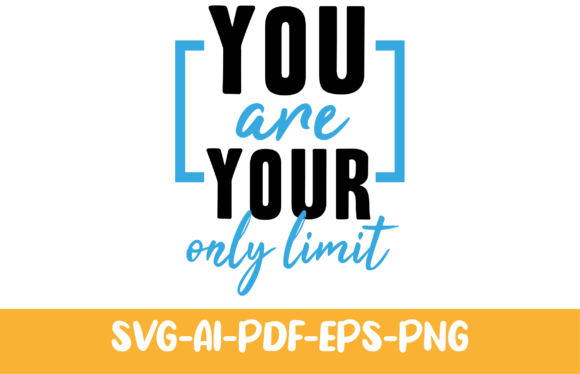
As a designer who has spent years digitizing files and testing them on everything from stiff canvas to flimsy jersey, I approach every new machine embroidery design with a mix of curiosity and skepticism. We have all seen quote-based graphics that look stunning on a screen but turn into a tangled mess of thread once the needle hits the fabric. When I first pulled up the file for You Are Your Only Limit, my initial impression was one of clean, modern simplicity. It does not scream for attention with excessive ornamentation; instead, it relies on strong typography and balanced spacing to convey its message.
This piece falls under the category of Print Templates and Graphics, which means it is versatile enough to be adapted for various mediums. However, my focus here is strictly on how this design performs in real-world embroidery scenarios. For Etsy sellers, craft business owners, and hobbyists looking to elevate their handmade product offerings, understanding the practical application of such a design is crucial before committing to production.
First Impressions and Visual Personality
The mood created by You Are Your Only Limit is empowering yet understated. It fits perfectly into the current trend of minimalist motivational decor. The layout appears open, avoiding the clutter that often plagues text-heavy designs. For an embroidery project, this is a significant advantage. Dense text requires high stitch density, which can lead to fabric puckering and thread breaks. This design, by virtue of its likely reliance on clear lettering, suggests a balance between readability and stitch efficiency.
Visually, the design feels at home on contemporary custom apparel or modern home goods. It does not feel dated or overly ornate, which gives it longevity. Whether you are creating a personalized gift for a graduate or stocking your small shop product line with bestsellers, the aesthetic is broad enough to appeal to a wide demographic without feeling generic.
Real-World Application: The Tote Bag Test
To truly evaluate this embroidery file, I imagined a specific use case: a heavy-duty cotton canvas tote bag. This is a staple item for many digital embroidery file users because it is forgiving and popular. Placing You Are Your Only Limit on the front panel of a tote creates an immediate statement piece. The flat surface of the canvas allows the stitches to lay evenly, ensuring that the lettering remains crisp.
In this scenario, the design acts as both decoration and branding. For an Etsy seller, this kind of tote bag design sells well because it is functional and inspirational. The clarity of the text means that even from a distance, the message is readable. If I were producing this for a client, I would likely opt for a contrasting thread colors scheme—perhaps white thread on navy canvas—to maximize legibility. The design’s structure supports this high-contrast approach without losing its integrity.
Versatility Across Products
Beyond totes, this design shows promise for sweatshirt embroidery. A left-chest placement on a crewneck sweatshirt offers a subtle, professional look suitable for corporate gifts or team morale boosters. Because the design is text-based, it scales relatively well. However, one must be cautious. While it works beautifully on larger surfaces like pillow covers or aprons, shrinking it down for small items requires careful consideration.
For baby embroidery projects, such as a onesie or a burp cloth, the size must be reduced significantly. Here, the simplicity of the design is a double-edged sword. If the letters become too small, the running stitch or fine details might get lost in the fabric texture. I would recommend testing a smaller version on scrap fabric to ensure the letters do not merge together. Similarly, for holiday embroidery gifts, this design could be adapted for kitchen towels, adding a touch of motivation to daily chores.
Technical Considerations and Pitfalls
While You Are Your Only Limit is visually appealing, there are technical areas where caution is necessary. Text-based designs are notoriously tricky on stretchy fabrics. If you are applying this to a t-shirt or a cap, the stabilizer choice becomes critical. A cut-away stabilizer is often recommended for knits to prevent the design from distorting after washing. Without proper stabilization, the letters may warp, ruining the clean lines that make this design effective.
Another concern is curved surfaces. Embroidering on a cap or a rounded mug sleeve requires adjusting the pull compensation. Since this is a graphic template, you must ensure the digitized version accounts for the curvature. If the design is too wide, it may wrap around the curve of a hat uncomfortably. Always check the width against your hoop size capabilities. If the design exceeds your standard 4x4 or 5x7 hoop, you may need to split it or choose a larger machine setup.
Dark fabrics present another challenge. If you are stitching light thread on dark fabrics texture, you might need an underlay stitch to prevent the background color from showing through the letters. This adds bulk, so test a sample to see if the added density causes puckering. The description notes it is easy to edit and change color, which is vital for adapting to different fabric backgrounds.
Enhancing Brand Value and Customer Trust
From a business perspective, using a clean, professional design like You Are Your Only Limit enhances perceived value. Customers associate crisp, well-executed embroidery with quality. A sloppy or poorly digitized quote can detract from the finished product, making it look amateurish. By choosing a design with clear structure, you build trust with your buyers.
For commercial embroidery projects, consistency is key. This design can serve as part of a broader collection of design assets. When used in printable mockup previews for your online store, it helps customers visualize the final item. Ensure that your mockups accurately represent the stitch texture, rather than just flat print, to set realistic expectations.
Practical Notes for the Designer
Before running this design on a customer’s garment, follow these steps:
- Test on Scrap Fabric: Always stitch out a sample on the same type of fabric you intend to use. Check for thread breaks and tension issues.
- Check Stitch Density: Examine the file to ensure the fill areas are not too dense for lightweight materials.
- Verify Licensing: The product description mentions it is a graphic template. Confirm whether the license allows for commercial use of the embroidered patch or finished items. Do not assume; read the terms.
- Contrast Check: View the design in black and white to ensure the letterforms remain distinct without color reliance.
- Hoop Size Confirmation: Measure the design dimensions against your machine’s maximum hoop area.
In conclusion, You Are Your Only Limit is a strong candidate for makers who value clarity and motivation. It is not just a pretty picture; it is a functional design element that, when executed with care, can elevate a simple item into a meaningful keepsake. Whether you are a seasoned applique design expert or a beginner exploring satins stitch techniques, this design offers a reliable foundation for creative expression. Just remember that the magic lies not just in the file, but in the precision of your stitching and the quality of your materials.