Reviewing All I Want for Christmas is a Physician
As an embroidery designer who has spent years translating digital concepts into tangible thread, I approach every new machine embroidery design with a mix of curiosity and skepticism. We have all seen designs that look stunning on a screen but turn into a tangled mess of thread breaks and puckering once they hit the fabric. Recently, I evaluated All I Want for Christmas is a Physician, a piece categorized under T-Shirt Designs and Graphics, to determine if it holds up in real-world production. This is not just about aesthetics; it is about functionality, durability, and commercial viability for the modern craft business.
First Impressions and Visual Personality
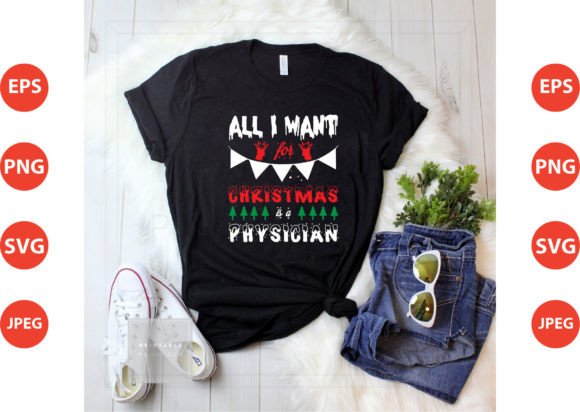
The immediate mood of All I Want for Christmas is a Physician is playful yet professional. It bridges the gap between holiday cheer and occupational pride, which is a lucrative niche for Etsy sellers and boutique owners. The layout appears balanced, avoiding the clutter that often plagues seasonal designs. For an embroidery project, clean lines are non-negotiable. If the visual personality is too busy, the stitching becomes indistinct, especially at smaller scales. This design seems to rely on clear typography and recognizable iconography, suggesting it would translate well into both satin stitch borders and fill stitch areas without excessive density.
When I imagine this on a product, I do not see it as merely a graphic. I see it as a statement piece. The theme resonates with medical professionals who work through the holidays, making it an ideal candidate for personalized gifts. However, the devil is in the details. A design labeled as Graphics for sublimation might have gradients or fine lines that do not survive the needle. My primary concern was whether the intricate parts of the physician motif would hold up or if they would require simplification for embroidery.
Real-World Application: The Sweatshirt Test
To truly test All I Want for Christmas is a Physician, I mentally placed it on a heavyweight cotton-blend sweatshirt. This is a staple item for custom apparel shops during the fourth quarter. On a dark navy or forest green fabric, the design needs high contrast. If the original files are optimized for light backgrounds, the thread colors must be adjusted. I recommend testing the design in black and white mockups first to ensure the silhouette remains readable without color reliance.
I also considered its use on a canvas tote bag. Tote bags are popular handmade products because they are functional and serve as walking advertisements. The texture of canvas is rougher than jersey knit, which can affect how running stitch outlines sit on the surface. If the design has delicate corners, they might get lost in the weave. For a tote, I would suggest increasing the stitch density slightly or using a heavier weight thread to ensure the message pops against the textured background. This makes it a strong contender for small shop product lines targeting healthcare workers.
Navigating Fabric and Hoop Constraints
Not every surface is forgiving. If you plan to use this design on a cap, you are dealing with a curved, structured surface. Caps require careful digitizing to prevent distortion. While All I Want for Christmas is a Physician may work beautifully on a flat pillow cover or apron, placing it on a dad hat requires checking the width against your hoop size. If the design is too wide, it will wrap around the curve and become unreadable from the front. Always measure the usable area of your cap frame before committing to a full production run.
Thin fabrics present another challenge. A lightweight baby onesie is a tempting market for baby embroidery, but dense stitching can cause puckering or discomfort against sensitive skin. For such items, you must use a high-quality cut-away stabilizer and potentially reduce the stitch count if the software allows. If the design relies heavily on solid fills, it might be too stiff for infant wear. In these cases, consider converting parts of the design into an applique design to reduce bulk while maintaining the visual impact.
Commercial Viability and Brand Consistency
For commercial embroidery projects, consistency is key. Customers buying a personalized gift expect a polished finished product. If All I Want for Christmas is a Physician has loose threads or unclear lettering, it undermines brand trust. The design’s clarity directly affects buyer engagement. A crisp, well-stitched logo or phrase signals professionalism. Conversely, a muddy execution suggests amateurism. This is why reviewing the embroidery file structure is crucial before selling.
The product description mentions formats like EPS, SVG, and PNG. These are primarily vector and raster graphics used for printing or sublimation, not native embroidery machine files. This is a critical distinction for digital product sellers. If you are an embroiderer, you cannot directly load an SVG into most industrial machines without conversion software. You must verify if a DST, PES, or JEF file is included or if you need to digitize it yourself. Using a graphic file as a reference for manual digitizing gives you control over thread colors and stitch types, ensuring the final finished product meets your quality standards.
Practical Notes for the Craft Business
- Test on Scrap Fabric: Never run a new design on customer goods first. Use similar weight and texture scraps to check for registration issues.
- Check Thread Contrast: Ensure the thread colors stand out against the fabric. White thread on white fabric is invisible; metallic or bright colors may be needed for holiday themes.
- Inspect Small Details: Zoom in on the digital preview. Are there tiny isolated stitches that might break? Simplify if necessary.
- Confirm Licensing: Before listing Etsy listings or selling at craft fairs, confirm that the license allows for commercial use of the finished items. The provided description mentions sublimation uses, so clarify embroidery rights with the creator.
- Mockup Variety: Create printable mockup images showing the design on various items like mugs and bags to attract a wider audience, even if you only sell the embroidered version.
In conclusion, All I Want for Christmas is a Physician has strong potential as a seasonal bestseller if handled with technical care. It fits naturally into the holiday embroidery market, appealing to a specific, proud demographic. By respecting the limitations of fabric and machinery, and by verifying the file compatibility for your specific workflow, you can transform this graphic asset into a high-value embroidered patch or garment feature. It is a reminder that great design is not just about what you see, but how it survives the journey from screen to stitch.